 A “technical garment” is a particular type of garment realized through an application of technologies and ad-hoc materials that guarantee comfort in specific conditions, for example high altitude weather conditions, low temperatures and sports activities. The main properties that a good technical garment should have are breathability, water repellency, wind resistance, insulation properties, lightweight, etc.
 In this article we are going to examine water repellency in detail; how it is obtained and how it is measured. We are going to provide real life examples that demonstrate how this important characteristic feature and its efficiency could decrease due to maintenance.
What is water repellency and why is it important?
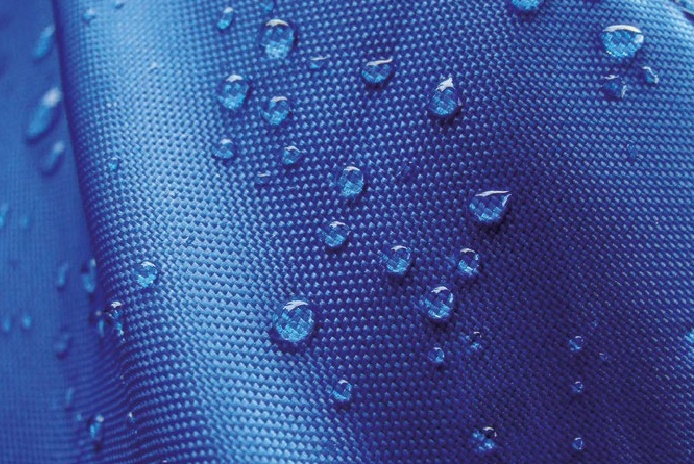
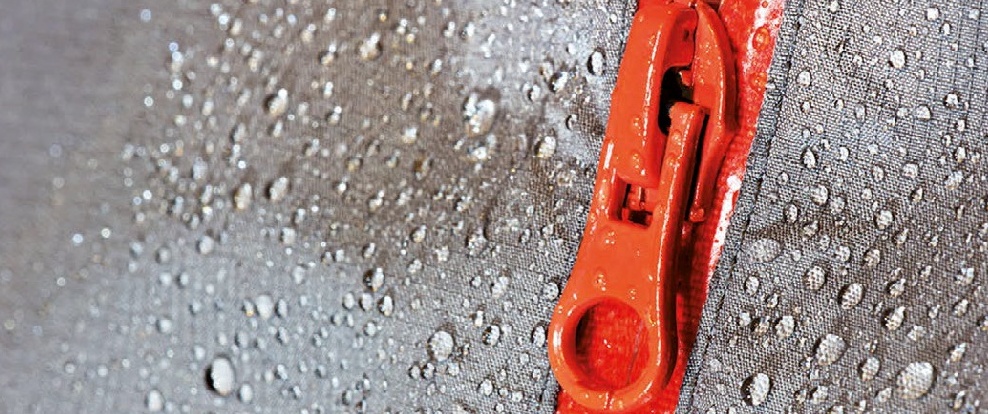
Water repellency (or WR, Water Repellency) is fabrics’ tendency, when lightly wetted, to make water drops roll off the surface. Ideally, such a feature should last during the whole lifecycle of a product. Why is this property so important? Because wet fabrics, apart from being much heavier, conduct the heat three times quicker than dry fabrics which contributes to dispersing the body heat. By avoiding water penetration, our waterproof garments prevent us from wasting the heat. Wearing a good quality technical garment means staying warm and dry even when exposed to extreme weather conditions.
A bit of chemistry…
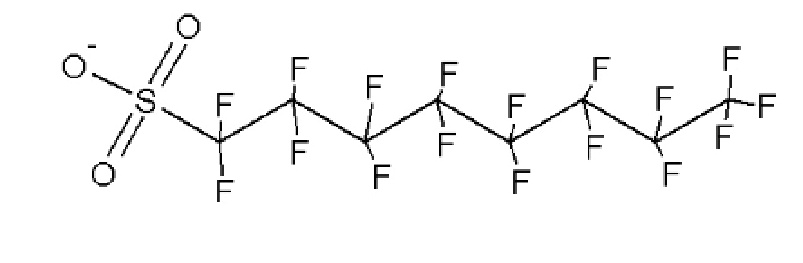 How do we obtain water repellency? It is obtained by applying a chemical product on fabrics that stops the water drops from flattening and wetting the fabrics. The most suitable products are usually fluorocarbon resins that, from the chemical point of view, are composed of molecules whose carbon-hydrogen links have been replaced by carbon-fluorine links, see the image on the left
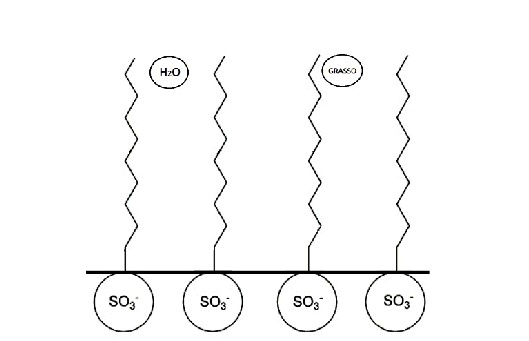 . Such chemical structure provides perfluorinated compounds with high thermic and chemical stability, and exceptional hydrophobicity (water repellency) as well as lipophobicity (fat rejection). In this way, water and fat molecules cannot penetrate and affect the fabrics. Unfortunately, these molecules have been known for their toxicity towards plants and animals as well as for contributing to the environmental pollution. As a matter of fact, they are resistant to natural degradation (photolytic, hydrolytic, biotic aerobic and anaerobic) due to their high chemical stability therefore, liable to bioaccumulation.
This is why the research today is aiming at identifying alternatives to perfluorinated compounds, however, whatever the new chemical-technological solution might be, the new compounds will most probably register lower water repellency degree.
- How do we measure water repellency? “Spray test”
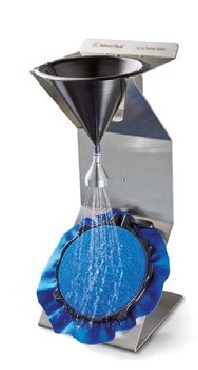 The spray test is usually carried out to determine water repellency. It is an official method (UNI EN ISO 4920) used to establish the resistance of fabrics to wetting by water. The device in use, see figure on the right, allows to spray a specific water volume on a fabric from a certain distance and angle.
At the end of the test, the fabric is evaluated visually and assigned a number that grades the result accordingly, from 0 (completly wet fabric) to 5 (completely dry fabric).
- Water repellency decreases due to laundering
It is important to underline that the fluorocarbon resin treatment of fabrics or other alternative compound treatments do not provide permanent results that tend to fade away every time fabrics are washed. Consequently, because of the maintenance and cleaning processes, water repellency tends to decrease. The decrease is particularly significant when fabrics are washed in solvents. Let us analyze a laboratory case. Initially, the fabric had strong water repellent properties, and it kept quite good water repellent performance after being washed in water, while it completely lost it after dry cleaning.
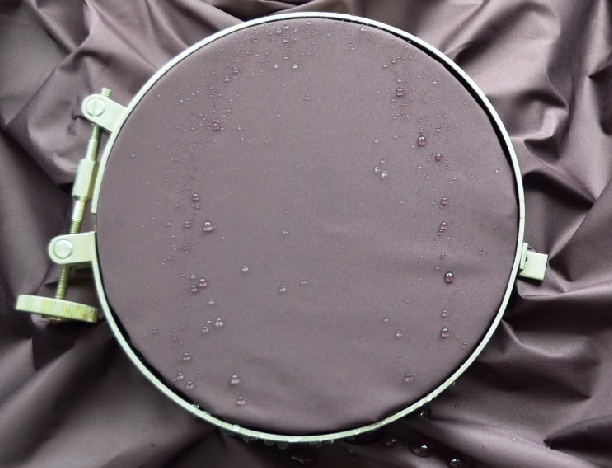
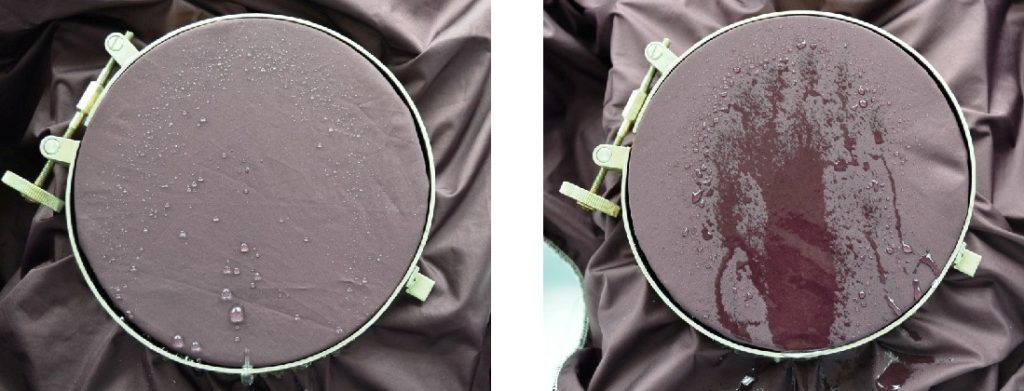
This happens because the friction that fabrics undergo while being washed both in water and in solvents, disorientates the fluorocarbon chains whose parallel position is then affected. They stop working as a shield that protects fabrics from water drops. Dry cleaning in particular, also causes the partial solubilisation of fabric’s previous treatment, therefore the waterproof effect is gone.
DETERGO MAGAZINE
SEPTEMBER 2016