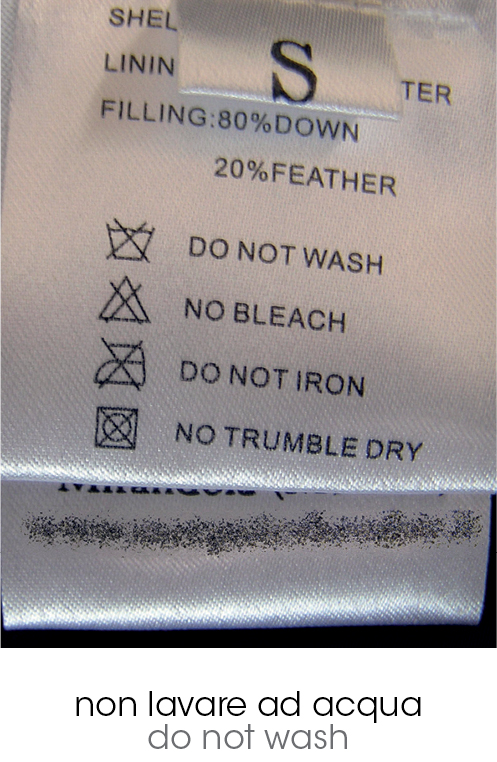
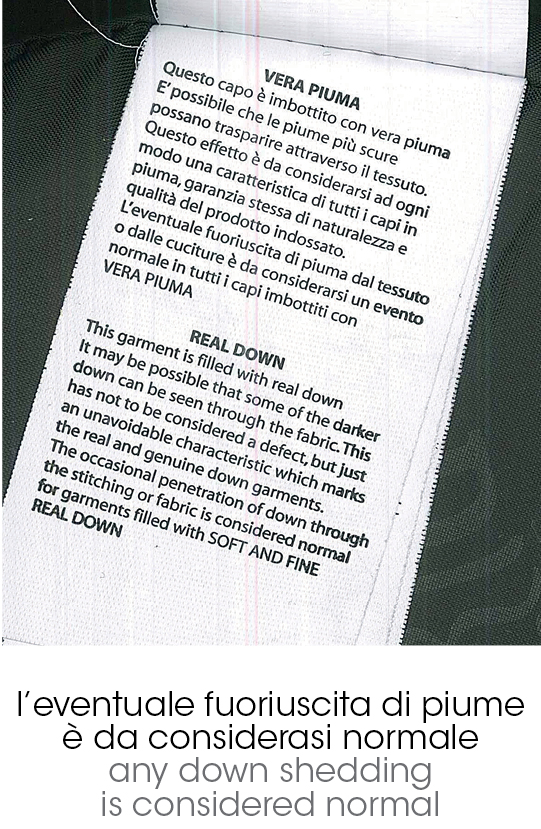
If the laundry operator sees strange labels like those below, before the cleaning, it is first recommended to:

1) explain to the customer the inconsistencies of the incorrect or incomplete labels, that are the sources of possible damage, independently of the washing process to be carried out;
2) obtain a declaration of indemnity (see facsimile below);
3) carry out some preliminary analyses, checking the colour discharge on a white cotton fabric when coming into contact with hot water or solvent (see attachment below).



Tests that can be carried out on the garment without damaging it, for preventing the colour fading
Check the colour resistance with a special test kit:
• soak the testing baton placed on the fabric, with a specific drop for each type, and pass with the hot iron;
• check if the test is stained or not.

We can find below some examples of damages that could also be created by the laundry operator, even by following the maintenance labels attached to the garment.
Dark labels or dark accessories on white fabric


A black leather label on a white garment will certainly leave stains, as shown in the photo. Therefore, a declaration of indemnity and a test with hot water and solvent is required.

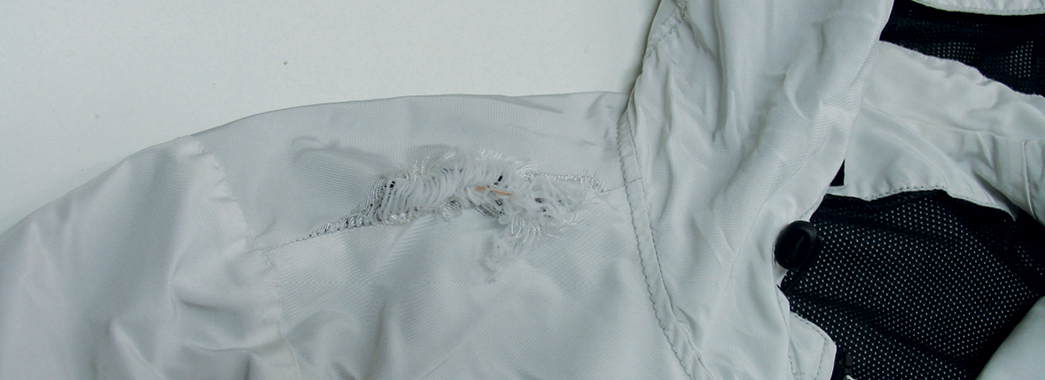
Seams opening
The causes are due to the low fabric resistance, tearing, and because the seam was made too close to the edge.
To check the tearing resistance of a fabric, you can simply apply a superficial pressure to the fabric in the weft direction with your fingers, checking whether the warp threads are running over the weft threads.
Fabrics laminated with gold or coloured plastic foils
Colour discharge on water washing, or by contact under the light pressure (colour migration).


Lamination detachment after dry-cleaning or on very old garments
The two laminated fabrics can detach, making wrinkles; the defect can show up with the first wash, or with the next washes due to degradation of the adhesive.
The dry-cleaning process definitely degrades the adhesive; the oldness of the garment is old can cause the hydrolysis of the adhesive, which loses its efficiency over the time. It is necessary to ask the customer for the garments’ purchase date.


Contrasting colour accessories on water-washable garments
1) get a declaration of indemnity
2) carry out preliminary analyses, checking the colour discharge on a white cotton fabric at the hot contact with the water
Heat-sealed fabrics used to join two fabric flaps instead of the seamed or the heat-sealed covers to protect the zipper from the water
If the heat-sealing is not properly performed or if it is too old, the flaps of the heat-sealed parts of the fabric may detach from each other, making a tear in the fabric.


For this type of fabric, it is advised to have a declaration of indemnity.
The excessive shrinkage of the bed-head and the bed-frame fabric, made in viscose/cotton blend, when washed with water
For all the upholstery fabrics with such compositions, the interior designer must wash the fabric before manufacturing the item in order to make it fit. Often the manufacturers of such articles are indicating the dry-cleaning, that anyway it is not able to remove the stains (dust, smog, light spots, etc.) settled during the use, so in this case the operator must:
1) warn the customer about the difficulty or the impossibility of removing the stains by dry-cleaning, and that water-washing should be necessary, despite the recommended care mentioned on the label;
2) get a declaration of indemnity.

Down spillage to water washing
If the fabric is not adequate or if the quilting is not well executed, it is possible that the feathers will come out of the fabric or the quilting. It is possible to fix it by cleaning the garment, but it is better warning the customer about this cleaning operation, because the feathers will continue to spill out while the garment is being worn and then the customer can blame the washing.


Pink spots on the collar or on the pockets
The combined action of the light and sweat, is causing a colour change that is not clearly visible at the pick-up time and that comes contested after by the customer. •


By
Ing. Vittorio Cianci
Direttore LART – Laboratorio Analisi e Ricerca Tessile

Detergo Magazine – Number 7/8, July/August 2022