
The viral pandemic, as predictable, is transforming into an economic pandemic in the most part of the western world, and not only. The concerns go to all the market economies even if the answers arriving from the economic main players and the governments tend to differ. Textile sector is not immune to the crisis, especially the textile sector that operates in a strict contact with tourism and hospitality fields.
Let us trace a map of textiles in laundry with figures in hand (according to the research commissioned by Assosistema in 2018) to obtain a complete picture. As far as outsourced services by hospitality businesses go, 70.9% of them relies on third parties in case of hygienizing and sanitizing. The sanitizing businesses supply hotels and restaurants with bed linen (87.3%), towels (78.4%), table cloths (70.9%).
The level of satisfaction expressed by hospitality structures in relation to the sanitizing services is particularly high, therefore worth mentioning, it is 8.3% (on a scale from 1 to 10). About 21%, which translates to one hospitality structure out of 5, have decided to progressively replace fabrics with paper. The figure is more consistent in tourist resorts, especially in places where the economic advantage constitutes a privileged requirement at the expense of beauty and elegance. As far as the indications on how to face and manage COVID-19 sanitary crisis, the World Health Organization established the guidelines also for the hospitality sector with the focus on the hygienic safety and textiles sanitizing. We are definitely facing a challenge, where hygiene and sanitizing have become of the utmost importance and relevance for the citizens. This is why, it is necessary for the sector to work with reliable partners as reference points; solid, responsible and qualified businesses that can offer linen rental and washing services with the aim of protecting the consumers. On the other hand, tourists will choose those structures that are able to completely demonstrate the hygienic measures applied, especially when it comes to linen and textiles treatment. Because of the lockdown imposed by the pandemic, the laundry textile sector, being an integral part of the hospitality sector, is facing a rather complex situation in Italy and abroad. What are the necessary measures to relaunch the sector? What commercia and communication strategies should be used? Let us focus on the companies that have outlined a broad-spectrum evaluation on how businesses are managing the re-opening stage and how they perceive the future of the sector.
According to Cristina Salvati, at the helm of Masa, a textile producer based in Bolladello di Cairate near Varese, “in Italy, after almost two months of the lockdown caused by COVID-19 emergency, just like in the other countries in the world, the topic of the environmental sustainability is now even more actual and current than ever. As a matter of fact, it was reported that, during the lockdown, the nitrogen dioxide concentration in the atmosphere was significantly lower all over Europe, with a consequent benefit for the environment. Coronavirus has also highlighted the importance of hygiene and sanitizing of surfaces that we are in contact with on the daily basis, at restaurants more than anywhere. Over the last years, clients have witnessed a progressively growing use of disposable table cloths by restaurants at the expense of the reusable table cloths. Moreover, as it often happens due to aesthetic preferences, some bars and restaurants have chosen the mise en place with the tableware in direct contact with the surface of the table. Doing so, however, it is not possible to assure the correct sanitizing of the surface and the consequent elimination of ecogerms and bacteria before the next client uses that table. Instead, the reusable table cloths are sanitized after each use by the industrial laundry systems. Sanitizing is carried out by washing the fabrics at temperatures that are higher than 60°, followed by the ironing stage at more than 180°: in this way, it is possible not only to disinfect the fabrics but also to completely eliminate the microorganisms that remain in the soil, and obtain a complete sanitizing process”.
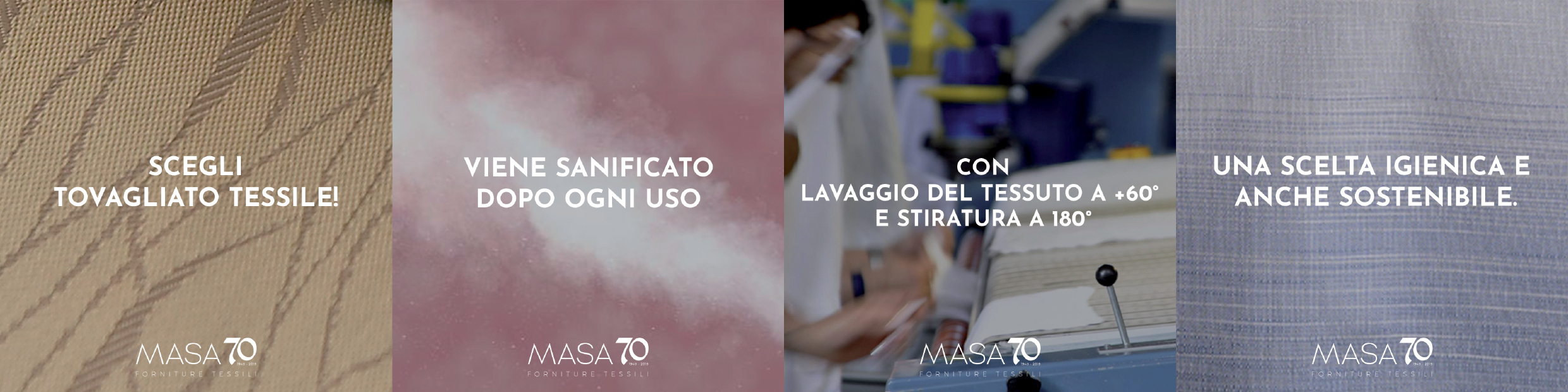
Cristina Salvati adds, “numerous studies have shown that the use of table cloths contributes to the reduction in energy waste and to the saving of more than 80% of non-renewable resources as well as to the reduction in the greenhouse gas emissions by 50% with the consequent, lower impact on the waste disposal. Today, we often talk about the importance of the reduction in plastic use. Single-use objects translate to the greater accumulation of waste to be disposed of, and this also relates to paper. Given such considerations, it is clear that table cloths made of fabrics are not only eco-friendly but they are also friendly towards our health protecting us from direct contacts with places and surfaces that have not been adequately sanitized. Reconstructing the trust-based relationships with clients, recently undermined by insecurities linked to the fear of contagion, has become extremely important and it should be done by assuring everyone that the maximum level of hygiene and protection has been reached”.
Marco Gastaldi, the CEO at Industria Tessile Gastaldi in Merone in the Province of Como, says: “from a sanitary point of view, some of the countries we export to, are re-opening their activities at a slower pace if compared to Italy. Our San Diego office in the USA has reported on a rather worrying situation. We were closed until 3 May, then we re-opened the company by managing the presence of staff through rotation shifts and we restarted our production at a less intense rate. There are weeks during which orders seem to be all back, but during some others, we seem to have returned to a standby. Objectively, I believe that the summer season tourism in Italy could actually recover slowly, while travelling linked to business trips or big cities will restart with difficulties in 2020. For the first time ever, since I started working here, the commercial operators based in Korea are telling me the same words and present the same evaluations as those we receive from the USA: a global evaluation where a common sense of uncertainty dominates. From the communication point of view, in order to support and promote the business, we use our social network channels where we have published a video cartoon dedicated to the reusable fabrics, trying to combine the sanitizing standards with the ecological compatibility of cotton highlighting the entirely certified manufacture. Let us not forget that we export 40% of our production both to Europe and the United States, and the remaining 60% is realized in Italy. Our products and collections, in spite of the difficult times, aim at the environmental sustainability and the use of natural fibers. We have kept a clear standpoint, a base for the future of our company”.
Roberto Littamè, the owner of Tessiltorre Srl, a company whose website shows “Made in Italy, attention to detail”, based in Dairago near Milan, explains, “every year we come up with new ideas to update our collections. Surely, this year the priorities have changed, yet, the pleasure of searching for quality and the new ideas are still the fundamental aspects of the business, as they actually constitute the company’s philosophy.
As far as communication goes, we have thought about designing, in collaboration with industrial laundries, posters in the form of stickers to place on the restaurant windows informing that the restaurant uses reusable fabrics table cloths, therefore assuring low environmental impact and guaranteeing linen treatment in compliance with the ecological standards, the hygienic and sanitary ones, and assuring an excellent, five-star sanitizing process. We have been focused on trying to help clients understand the importance of quality and safety, and consequently, on bringing back the correct meaning to our work.
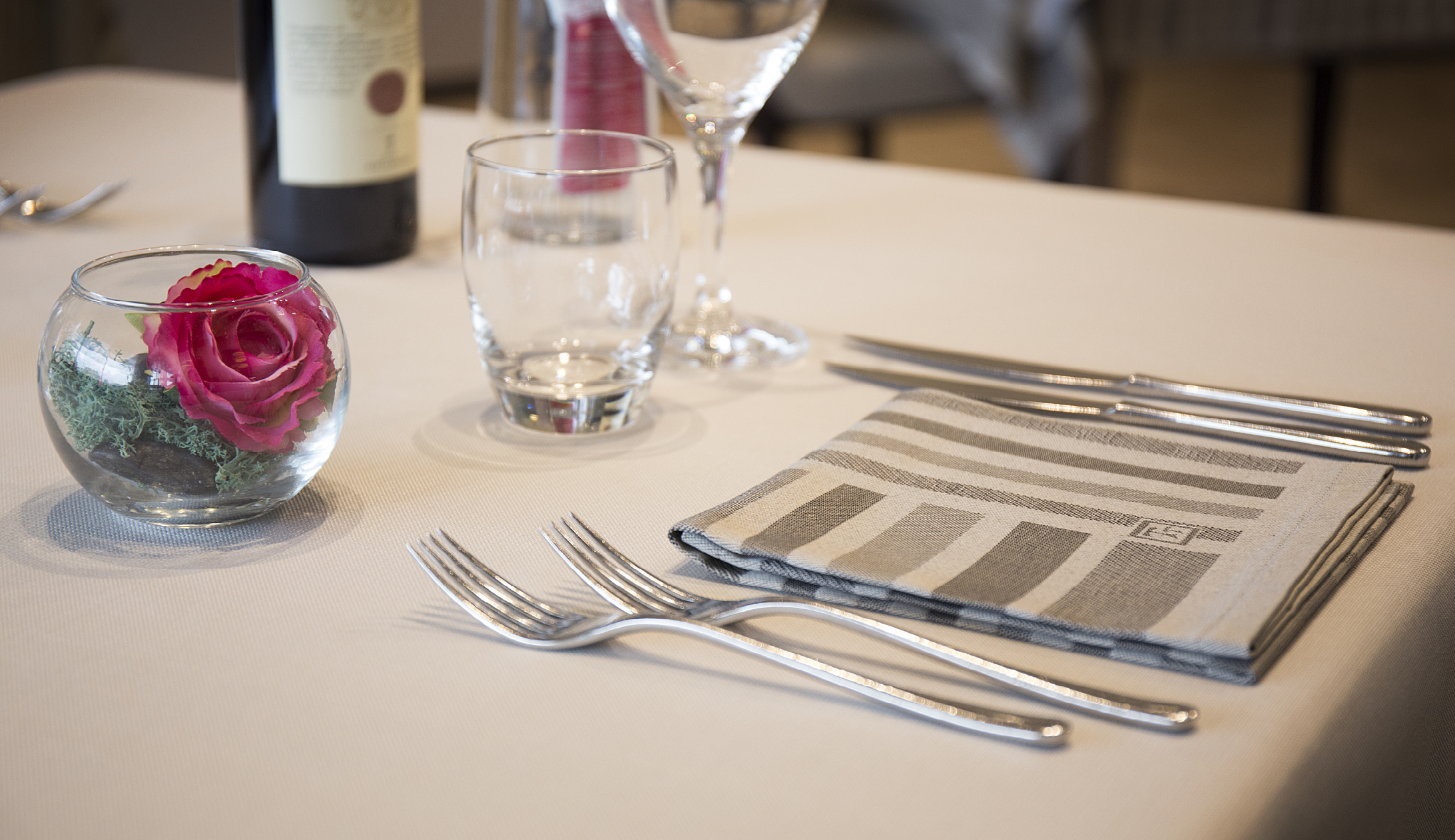
A nice table cloth is not just an aesthetically attractive object but it is a hygienically safe product if treated professionally. In Italy, before the lockdown, restaurants used to keep a table cloth as a base, the first layer, and only changed the upper second table-cloth guard layer for every new client; however, at the moment, with hygiene being the priority, this kind of a procedure has changed. Some restaurants would use a single table-cloth only and change it for each client, just like it commonly happens in other countries. Others would only use the second layer, the table-cloth guard, that also gets changed for each, new restaurant client. We are facing a change in the use of table-cloths in relation to the new priorities and needs”.
Andrea Rovea, the CEO at Parotex, a textile producer based in Busto Arsizio, is illustrating how the company is dealing with the current situation and what counter-measures to adopt in order to re-launch the sales. “We export quite a lot to foreign
markets. Everything that relates to the laundry sector is under the brand Parotex, in particular in Italy and Europe. Instead, we use the brand CasaRovea, when selling our products directly to hotels in America, the Middle East and the Far East. We kept the company closed during the obligatory lockdown until 4 May. Then, we re-activated the machines but kept them at a minimum operational level with reduced production. The crisis is generally there, and the business has partly slowed down in case of some activities while in some other cases, the orders and supplies have been blocked completely.
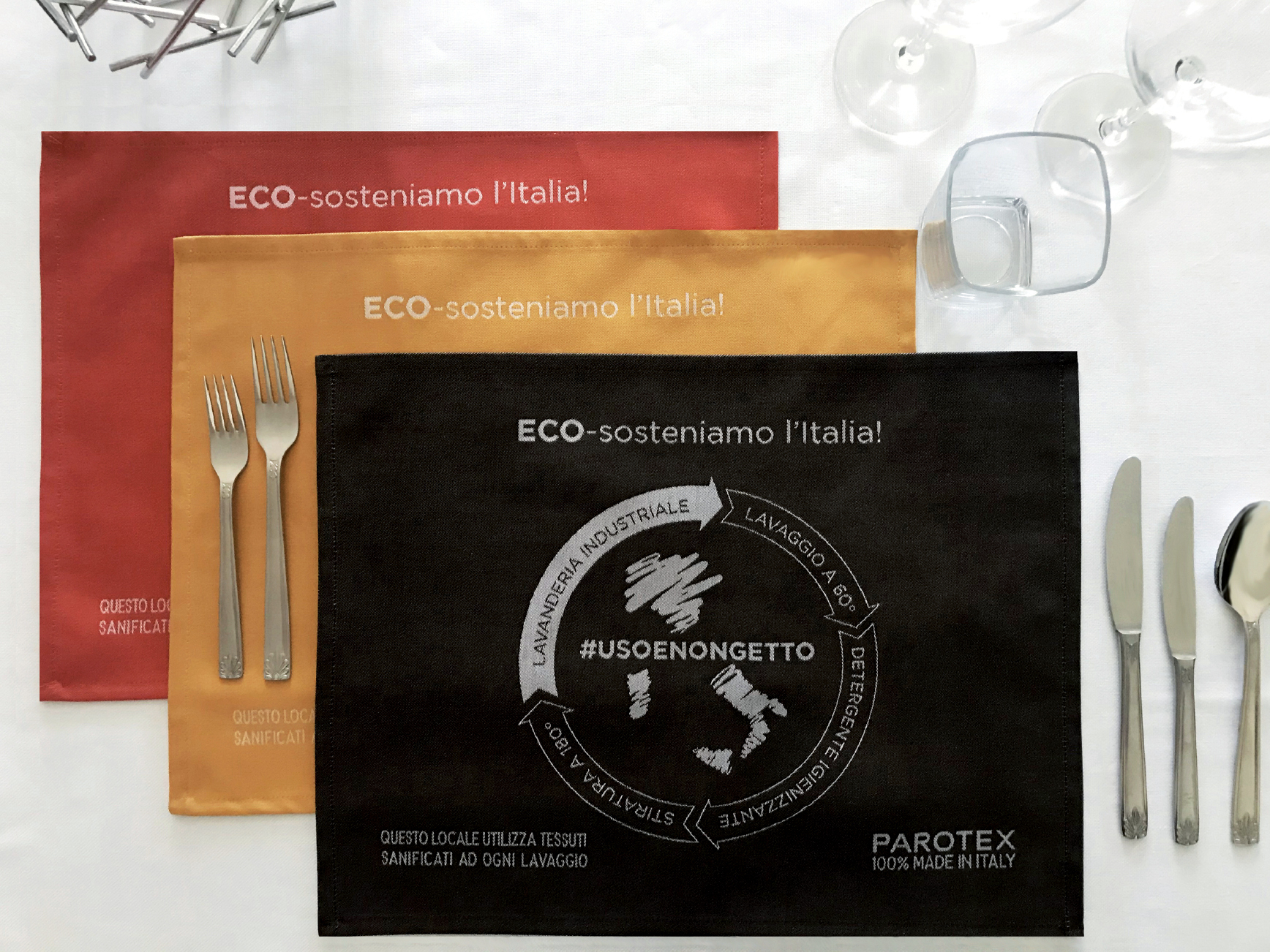
The difference to us is that as far as Parotex brand goes, the orders have decreased more significantly, while in case of CasaRovea, the situation is quite different. We had a stop in supplying our products to our regular clients, but now, the orders are back again, especially those from the Far East where business activities reopened before we did. In case of the United States, where new hotels were about to open before the lockdown, we continued to work without breaks in terms of offers, price quotations and projects design. At the moment, we believe it is crucial to make a purely service-oriented choice. We are trying to be present and support clients in the best possible way as far as a high-quality customer care service goes. This is what we have focused on in Italy and in Europe. As far as laundries go, the guide lines for the restaurant sector were provided late and not always in a clear way, which has contributed to markets uncertainty. From communication point of view, we have activated campaigns on social networks aiming at the fact that table cloths, as they constitute a sanitized product, are safer than paper if we compare the two. We have designed table fabric napkins where we inserted all the useful information on the sanitized washing process, in agreement with laundries. The title of the campaign is “use it and do not throw away” to promote the use of fabrics that can be safely reused thanks to the professional laundry washing cycles. The informative gadget has been created and designed for the final user”.
In conclusion, what emerged from the companies’ points of view is that the necessity to awaken the public opinion on the use of textiles is not simply a question of aesthetics but it is, first of all, a question of awareness and care for both the environment and our health.
by Marzio Nava
JUNE 2020
DETERGO