Causes of the fabrics shrinkage in the washing process, depending on their composition:
wool, cotton/linen, polyester/nylon
CAUSES OF THE WOOL SHRINKAGE
There are three types of dimensional changes of a woollen fabric:
1) the felting shrinkage is an irreversible change and it depends only on the type of the wool used, its distribution, sizes and scales. It is the most important dimensional variation;
2) the hygroscopic expansion is a reversible variation and it depends on the fabric finishing treatments (decatizing, etc.), packaging, humidity variations during the textile life cycle, and the environmental conditions in the country where the garment is used;
3) the relaxation shrinkage during the vaporisation phase, is an irreversible change, although less important than the two previous changes, as the vaporisation conditions (temperature and humidity) are less important compared to those from the decatizing treatment.
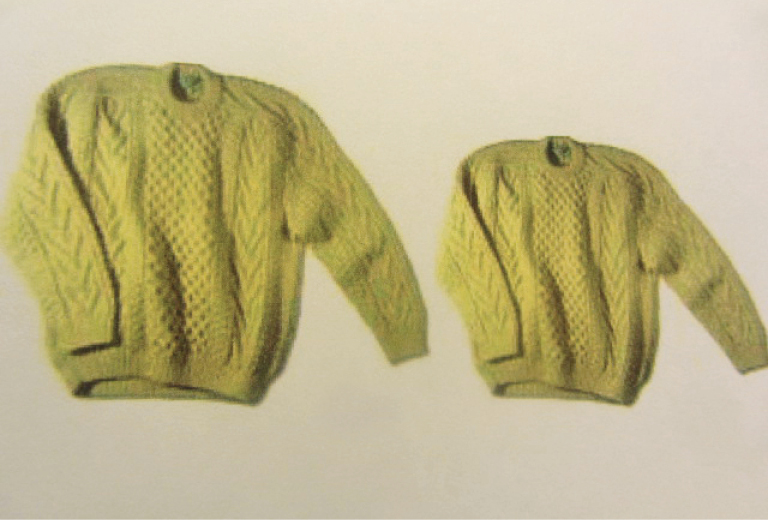
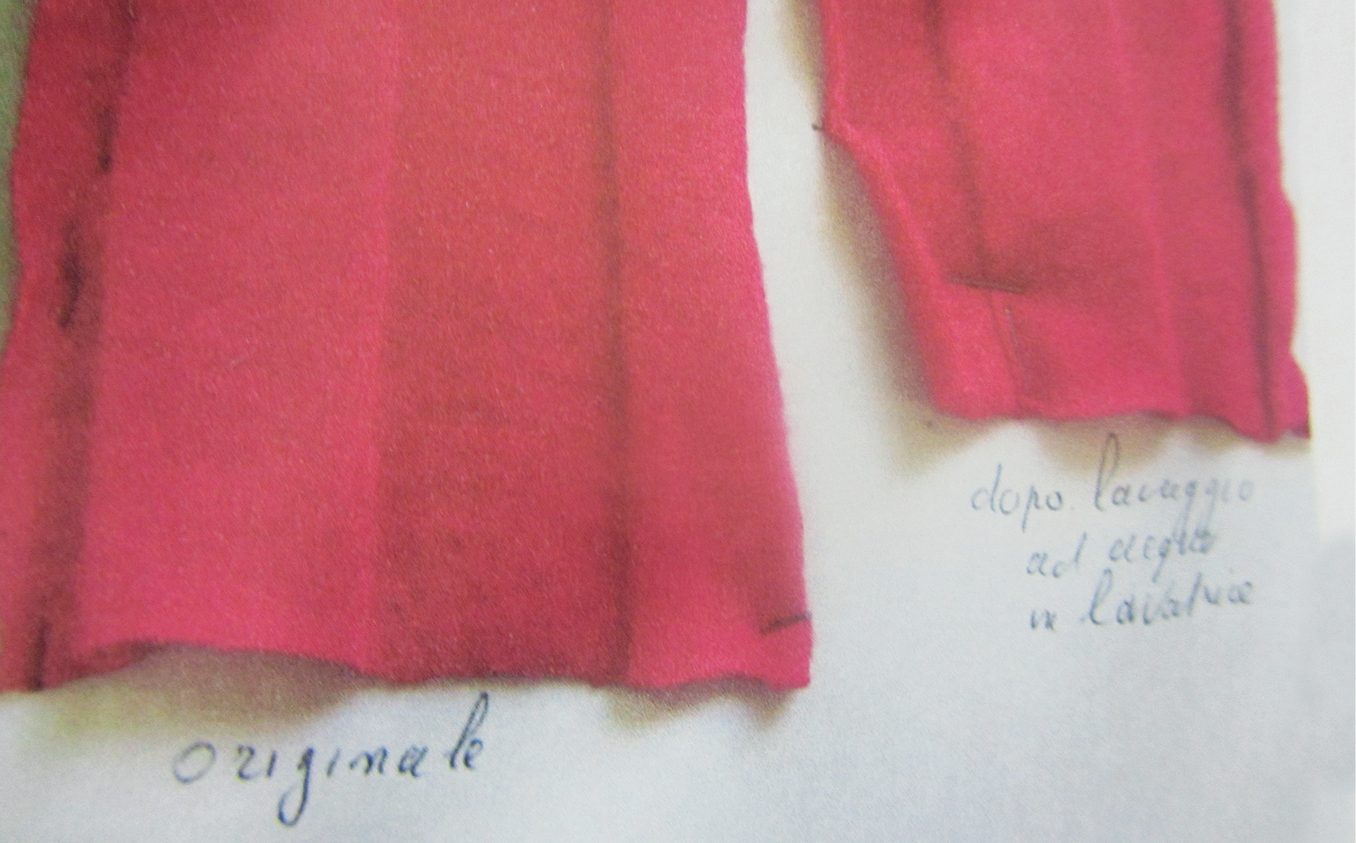
Felting shrinkage due to the scales
The dimensional stability does not concern only the fabric size, but can lead to irreversible changes to the touch and appearance. When the wool or the animal hair fibres are immersed into the water, they are swelling up, as they are highly hygroscopic, acquiring volume and softness; the mechanical stirring in a humid environment causes irreversible fibres compacting, known as felting or fabric shrinkage.
As it can be seen in the photo below, the surface of the wool and animal hair fibres is covered with scale-like flakes having their roots in the fibre itself and the loose ends; these scales bind the various fibres together in movement, forming an irreversible and increasingly compact tangle until they become a felt.
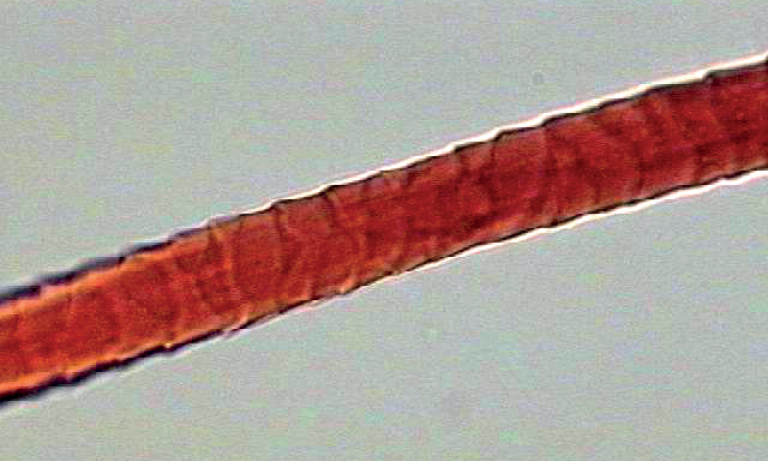
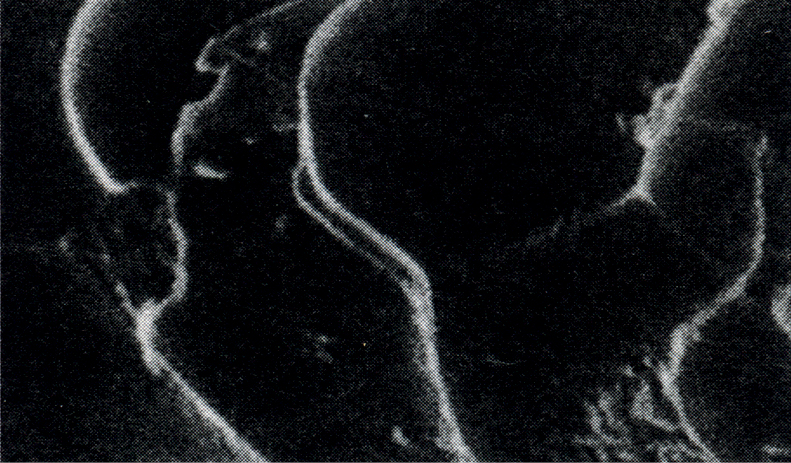
Longitudinal view of a wool fibre
The scales are responsible for the felting and for the subsequent shrinkage of the cloths and knitwear, caused by the wet cleaning. For causing the felting, there are necessary a humid environment and a mechanical stirring; the water pH (whether neutral or alkaline) and the washing temperature are highly influencing this process.
The lower edge of the scales is tightly bonded to the fibre, while the upper edge is pointing differently outwards, depending on the following parameters:
• temperature: when the temperature rises, the protrusion increases;
• water status: when the pH changes, the protrusion increases (therefore neutral soaps should be used);
• passing between scale and flakes;
• the shape of the flake if smooth or engrailed;
• the uniformity or the irregularity regarding the shape and the distribution from the root to the top.
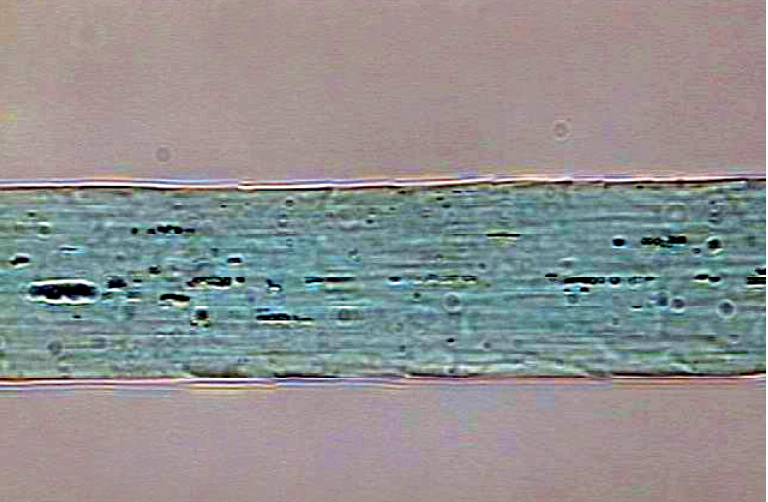
Under the same conditions (pH and temperature) the felting is different from fibre to fibre due to the geometry and the flakes arrangement. It is therefore necessary to take into consideration the type of material before defining the fulling or the finishing methods for the garments.
The geometry and the scales arrangement are fundamental elements of qualitative recognition for the microscopic analysis between wool and wool, and between wool and the animal hair. For example, the knits made of mohair fibres have few scales and are difficult to felt.
The most suitable wash for the woollen or animal hair garments, is the gentle hand washing, or the dry cleaning without humidity.
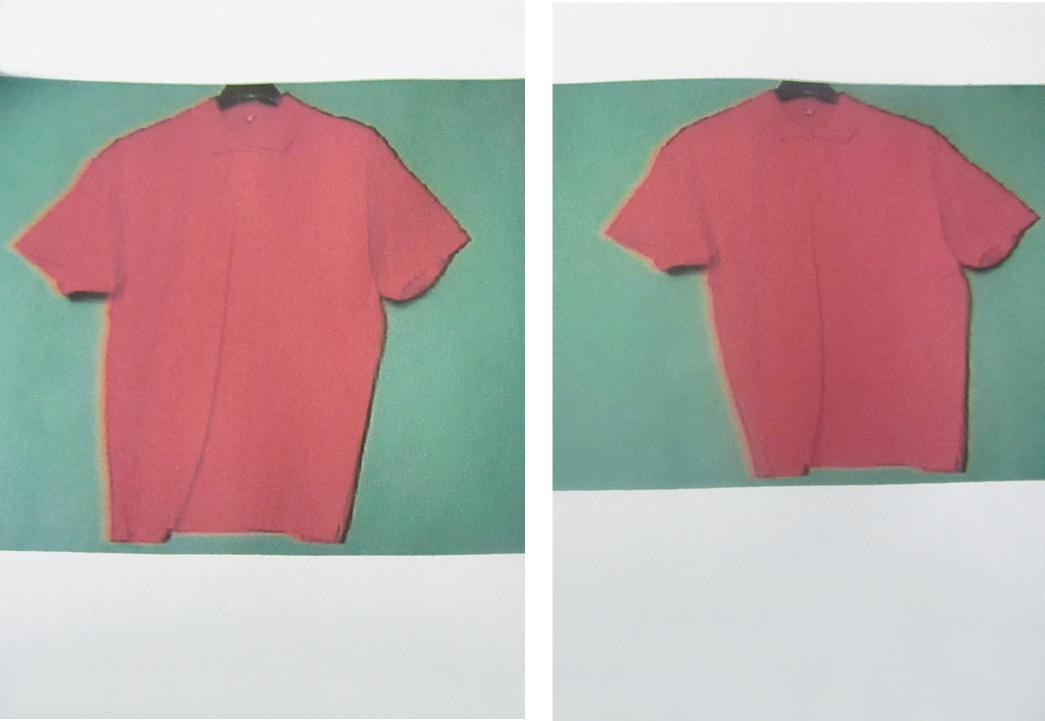
Cotton t-shirt excessive length shrinkage
DIMENSIONAL STABILITY OF COTTON AND LINEN FABRICS
Back to wet cleaning for reshaping
One of the most frequent defects that has its origins in the water or the wet-dry cleaning, is the clothes and furniture shrinkage (t-shirts, curtains, sofa covers etc.). For a proper cleaning, it is often necessary the addition of the water in the dry-cleaning process.
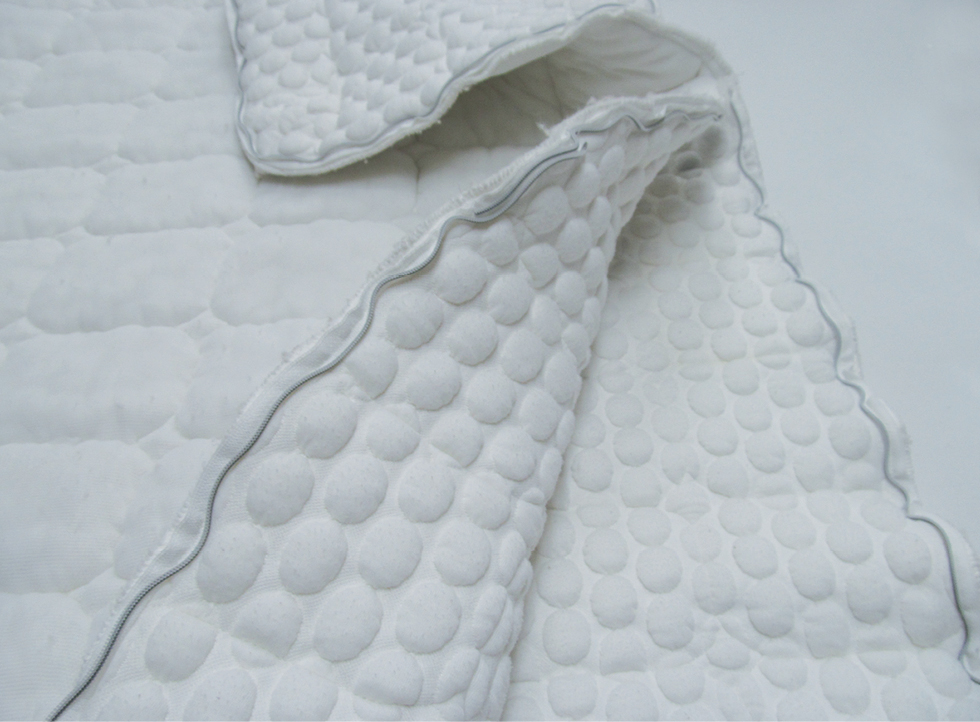
Cotton mattress cover shrinkage (edges corrugations)
For better explaining the reason for this possible and frequent defect, it is necessary to refer to the cotton and linen fibres properties, and to relate them to those of other fibres, e.g. wool. The following graphic shows the mechanical resistance of the various fibres, indicated as breaking load (the effort required to break the fibres) and the elongation undergone by the fibre at the moment of breaking, expressed as a percentage of the initial length.
Cotton and linen have a high breaking load and a low elongation of about 4%, differently from the wool, that has a low tensile strength and a high elongation of around 30%. From spinning to weaving, and up to dyeing and finishing, the cotton fibres are stressed in both directions. Due to the low elongation of the fibre under stress, the cotton fabrics cannot be deformed while undergoing all the treatments during the textile cycle (spinning, weaving, dyeing, etc.), so they accumulate internal tensions, and their extent depends on the stresses they have suffered.

When the fabric is wet, it tends to relax and return to its balance position: as result it shrinks in a percentage depending on the previously accumulated stresses. The manufacturer should submit the fabric to treatments that can reshape it (or rather relax) before packaging: copper coating – sanforizing – mercerizing. If the relaxation treatments are not carried out or are carried out badly by the manufacturer, the problem of the abnormal shrinkage remains in the charge of the consumer/laundry.
The fabric shrinkage to water washing, or after the wet treatments depends on the previous history or rather the stresses that the yarn and fabric have undergone in their textile cycle, from the processing of the material to the finished product. Since no one can be aware of the garment’s previous history when washing it, the garment may or may not shrink and if it does, the rate of shrinkage will be unpredictable.
Therefore, for the cotton or for the linen garments, are recommended the hand washing and the natural drying, and it is absolutely necessary to avoid the tumble drying. The main cause of a cotton fabric shrinkage that has accumulated tension during its life cycle, it is not the washing temperature but the mechanical stirring. If there is necessary to be washed in the washing machine and not by hand, there must be used cradle-type machines with programmed motion. Before tailoring a sofa cover or curtains, the fabric must be washed, otherwise it will shorten with the first washing.

PURE POLYESTER OR NYLON, OR MIXED
Shrinking due to the ironing heat or no heat fixation. These fibres are sensitive to the dry heat.
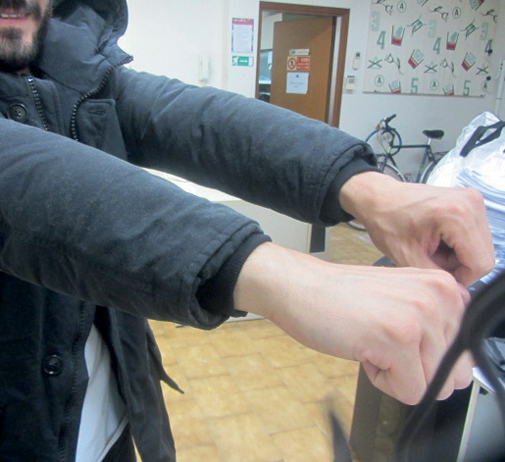
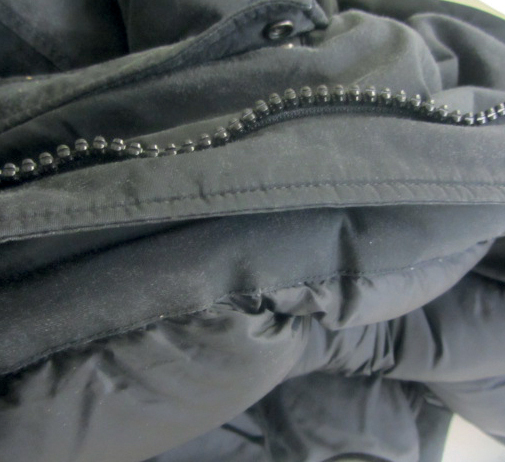
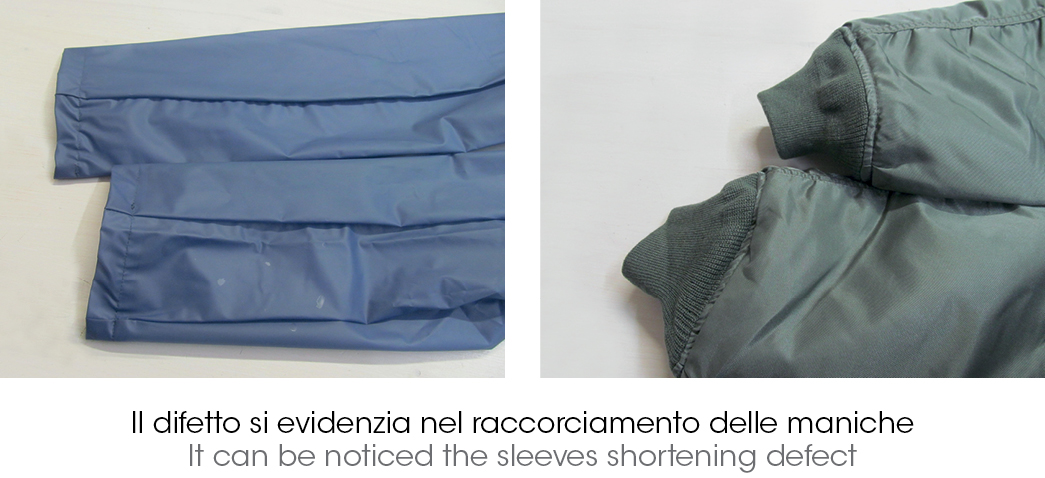
The down jackets, for example, are ironed on a form finisher, and if the heat is too dry (<140°C) the fabric will shorten, and the customer will notice this by the shortening of the sleeves and the waviness of the zips, as shown in the picture.
If the garment is ironed on a form finisher, do not use dry steam but the wet steam. •

by
Ing. Vittorio Cianci
Direttore LART – Laboratorio Analisi e Ricerca Tessile
Detergo Magazine – Number 3, March 2022